7 Sales Pipeline Metrics to Forecast Revenue in 2026
Stop relying on gut feelings and messy spreadsheets to forecast revenue. Discover the top sales pipeline metrics every sales and revenue team needs to track.


The weekly revenue meeting rolls around, and it’s time to forecast the quarter.
But when you check the CRM: The last logged activity was a month ago, the notes are empty, and the pipeline stage hasn’t moved.
Sales and revenue leaders can’t run a scaling business on gut feelings and spreadsheets. If you can’t accurately measure your sales pipeline, you can’t predict your revenue.
The problem is that most teams struggle to track their metrics because the data is buried in the sales stack, spread across a dozen sales pipeline tools. By the time the CRM or spreadsheet is finally updated, the data is already stale.
Building a revenue engine starts with tracking the top sales pipeline metrics using pristine, automated data.
What is a Sales Pipeline?
A sales pipeline is a structured, visual representation of where all open deals currently sit in your sales process.
This tracks the exact, repeatable steps a seller takes to move a prospect from an initial cold touch to a closed won deal. A healthy pipeline gives you a clear line of sight into your future revenue, highlighting which deals are accelerating, which are stalling, and where you or your team need immediate improvement.
Sales Funnel vs Sales Pipeline: What’s the Difference?
“Sales funnel” and “sales pipeline” are used interchangeably, but they measure two completely different things.
The easiest way to remember the difference between the sales funnel and the sales pipeline is to look at who’s taking the action:
- The sales funnel reflects the buyer’s journey. It measures the drop-off rate as a massive pool of potential leads slowly narrows to a few paying customers: Awareness, Interest, Consideration, and Decision, for example.
- The sales pipeline reflects the seller’s process. It tracks the internal stages you control: Prospecting, Discovery Call, Demo, Proposal, Negotiation, and Closed Won, for example.
You analyze the funnel, and you manage the pipeline.
Top Metrics to Evaluate Sales Pipeline Health in 2026
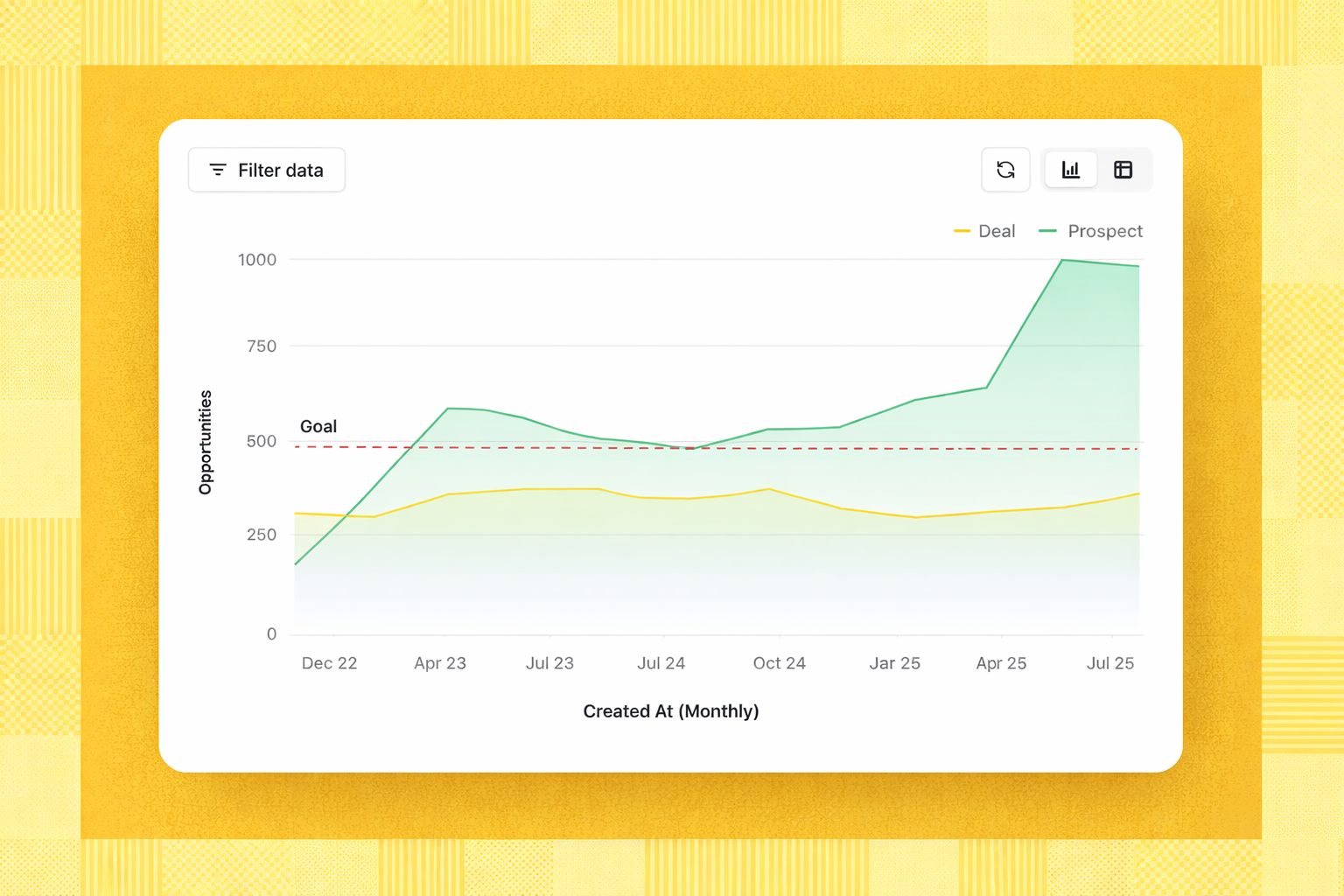
Move away from gut-based forecasting. Trust your forecast with sales pipeline metrics based on real activity rather than manual updates.
Here are the metrics you need to track in 2026:
- Pipeline velocity: The speed at which pipeline turns into revenue.
- Pipeline coverage ratio: Whether you have enough pipeline to hit quota.
- Win rate: The percentage of opportunities you win.
- Stage-by-stage conversion rate: Where deals fall out of the sales process.
- Average sales cycle length: The time it takes to close a deal.
- Average deal size: The average financial value of a won deal.
- Lead response time: How fast you reply to new inquiries.
Now let’s explain each sales pipeline metric.
#1. Pipeline Velocity
Pipeline velocity tells you how fast money is moving through your business. It calculates the speed at which qualified leads turn into closed revenue.
If your velocity is dropping, it means deals are getting stuck, and your quarter is at risk even if your sales pipeline looks full on paper.
How do I calculate pipeline velocity? Use this formula: (Number of Deals x Win Rate x Average Deal Size) ÷ Sales Cycle Length
#2. Pipeline Coverage Ratio
Do you actually have enough potential revenue in the works to hit your quota? Pipeline coverage ratio compares your total open pipeline against your revenue target. Because you won’t win every deal, a 1:1 ratio guarantees a miss.
Most high-performing sales teams aim for a 3x to 4x coverage ratio to account for lost deals and stalled timelines.
How do I calculate pipeline coverage ratio? Use this formula: Total Pipeline Value ÷ Sales Quota
#3. Win Rate
Your win rate is the percentage of qualified deals that your team successfully closes. This metric is a ruthless indicator of your team’s effectiveness.
If your win rate is low, it points to a problem with sales execution, product-market fit, or the quality of the leads entering your sales pipeline.
How do I calculate win rate? Use this formula: (Closed Won Deals ÷ Total Opportunities) x 100
#4. Stage-by-Stage Conversion Rate
Looking at your overall win rate isn’t enough. You need to know where deals are dying. Stage-by-stage conversion reveals the exact bottlenecks in your process.
Notice that 90% of deals move from Demo to Proposal, but only 10% move from Proposal to Closed Won? You don’t have a volume problem, but you do have a pricing or negotiation problem.
How do I calculate stage-by-stage conversion? Use this formula: (Deals Advancing to Next Stage ÷ Deals in Current Stage) x 100
#5. Average Sales Cycle Length
Average sales cycle length is the total time from the first touchpoint to a signed contract, so knowing this sales pipeline metric gives you accurate forecasts.
If your average cycle is six months and you or a rep on the sales team thinks a massive deal will close in three weeks, you immediately know to scrutinize that forecast.
How do I calculate average sales cycle length? Use this formula: Total Days for All Closed Deals ÷ Total Number of Closed Deals
#6. Average Deal Size
This is the average dollar value of your closed won deals. Tracking the average deal size helps you understand your market trajectory: If this metric is shrinking, you or your team might be resorting to heavy discounting to hit quota, or you're targeting the wrong buyer tier.
How do I calculate average deal size? Use this formula: Total Revenue ÷ Number of Closed Won Deals
#7. Lead Response Time
Time kills all deals, especially inbound ones. Lead response time measures exactly how quickly you’re engaging with new leads. If a high-intent prospect requests a demo and you take three days to send an email, that prospect has already moved toward your competitor.
How do I calculate lead response time? Use this formula: Total Time to Respond to All Leads ÷ Total Number of Leads
How to Calculate Sales Pipeline Metrics
Sales Pipeline Metric | What It Measures | How to Calculate |
|---|---|---|
Pipeline Velocity | The speed at which pipeline turns into revenue | (Number of Deals x Win Rate x Average Deal Size) ÷ Sales Cycle Length |
Pipeline Coverage Ratio | Whether you have enough pipeline to hit quota | Total Pipeline Value ÷ Sales Quota |
Win Rate | The percentage of opportunities you win | (Closed Won Deals ÷ Total Opportunities) x 100 |
Stage-by-Stage Conversation Rate | Where deals fall out of the sales process | (Deals Advancing to Next Stage ÷ Deals in Current Stage) x 100 |
Average Sales Cycle Length | The time it takes to close a deal | Total Days for All Closed Deals ÷ Total Number of Closed Deals |
Average Deal Size | The average financial value of a won deal | Total Revenue ÷ Number of Closed Won Deals |
Lead Response Time | How fast you reply to new inquiries | Total Time to Respond to All Leads ÷ Total Number of Leads |
Do I Need Sales Pipeline Metrics for Forecasting?
Every forecast needs to be rooted in sales pipeline metrics. Trying to forecast without concrete metrics is like driving blindfolded. You might guess where you’re going, but you’re eventually going to crash.
Tracking these metrics is important because:
- It eliminates guesswork by replacing a ‘good feeling’ with hard data that gives you an objective reality of what will close and when.
- It spots revenue gaps early because metrics like pipeline coverage ratio act as an early warning system. They alert you weeks in advance if you need to drastically ramp up outbound prospecting to hit your end-of-quarter number.
- It predicts cash flow so that the business can make reliable, aggressive decisions based on real projected revenue.
Accurate forecasting isn’t magic. It’s the result of tracking the right metrics with reliable data.
Here’s the Secret to Accurate Data: Sales Pipeline Automation
The real challenge after knowing which sales pipeline metrics to track is getting accurate data.
You’ve either built a sales stack or you’re still buying tool after tool: a legacy CRM, a separate dialing app, a third-party sequencing tool, and…the list goes on.
The sales stack relies on manually updating fields, logging calls, and checking boxes at the end of the week. But your data will always be wrong, not to mention you and your team just hate the admin work.
The only way to get total visibility is through sales pipeline automation.
You need a Revenue Operating System. When you have a complete revenue platform like Reevo, you eliminate all the layers getting in your way of selling. Reevo automatically captures all first-party activity data by handling your email, dialing, and meeting intelligence.
Reevo’s AI listens to calls, drafts emails, and instantly updates pipeline stages and forecasting fields. The result is pure, accurate context that you can actually trust.
Stop Guessing, Start Knowing Sales Pipeline Metrics
If you want to build a predictable revenue engine, stop relying on ‘happy ears’ and messy spreadsheets. Track the sales pipeline metrics that matter, and ensure the data fueling them is flawless.
Ditch the stack, automate your sales pipeline, and get total visibility into your revenue with Reevo.
Frequently Asked Questions
A force multiplier for sales teams.
Get started

